Designing a Progress System for Manage
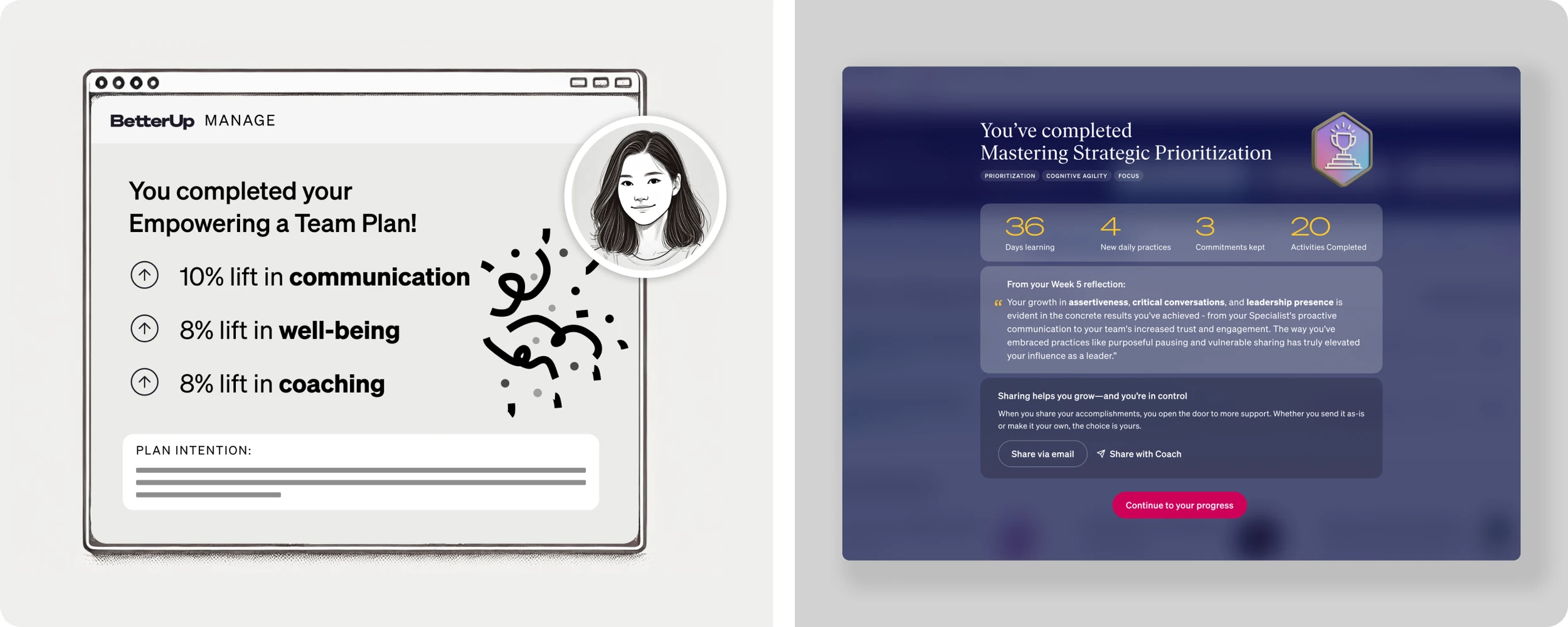
BetterUp’s Manage product helped managers build leadership skills, but growth remained invisible inside the experience, causing engagement to drop early. I led the design of a progress framework that surfaced development across time, turning isolated learning plans into a system that reflects ongoing leadership growth.
Company
BetterUp
Role
Lead Product Designer
Timeline
3 months
Problem Discovery
Manage was designed to support ongoing leadership development, yet engagement often dropped before even getting 50% of the way through a development plan. To understand why, I led 1:1 discovery interviews with managers across industries and experience levels, focusing on how they think about professional growth and progress.

Three patterns emerged:
Managers disengage when leadership training feels generic rather than tailored to their real challenges.
Motivation drops when advancement paths are unclear or companies appear less invested in their growth.
Leadership development happens gradually, making milestones and small wins critical for sustaining momentum.
These insights reframed our opportunity:
How might we make leadership growth visible so managers feel momentum and continue investing in their development?
Persona & Journey Discovery
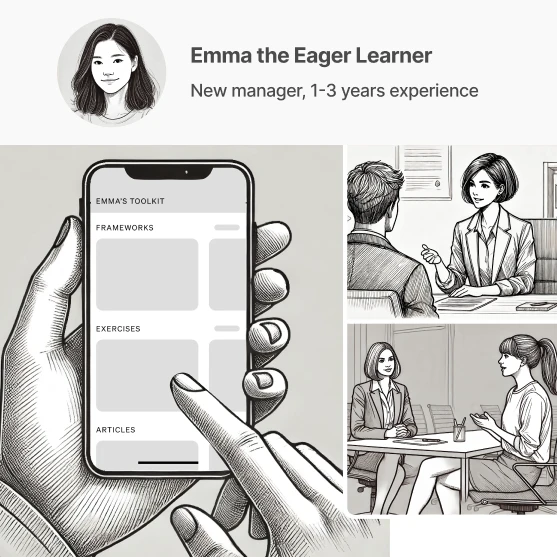
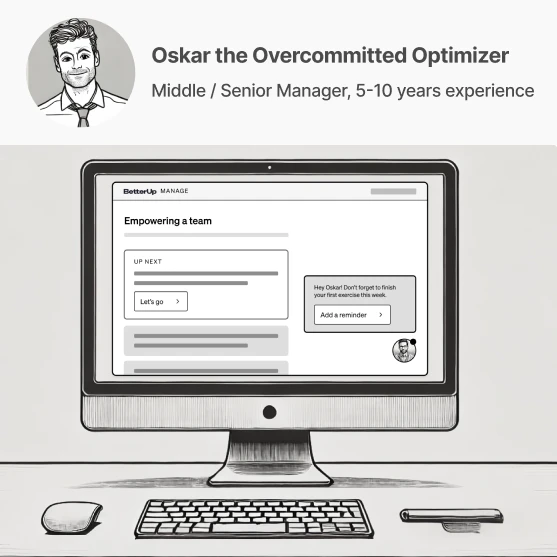
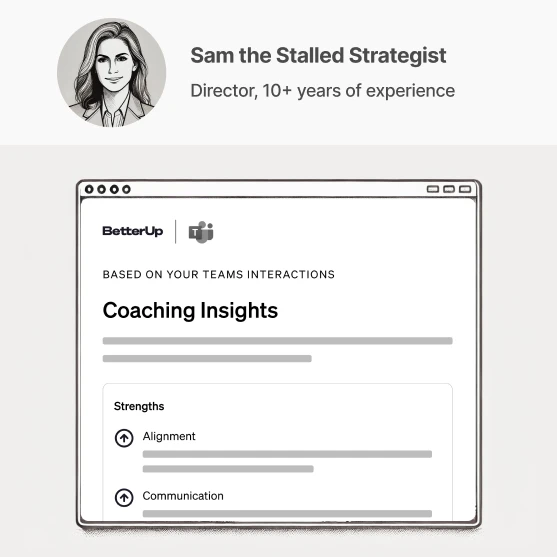
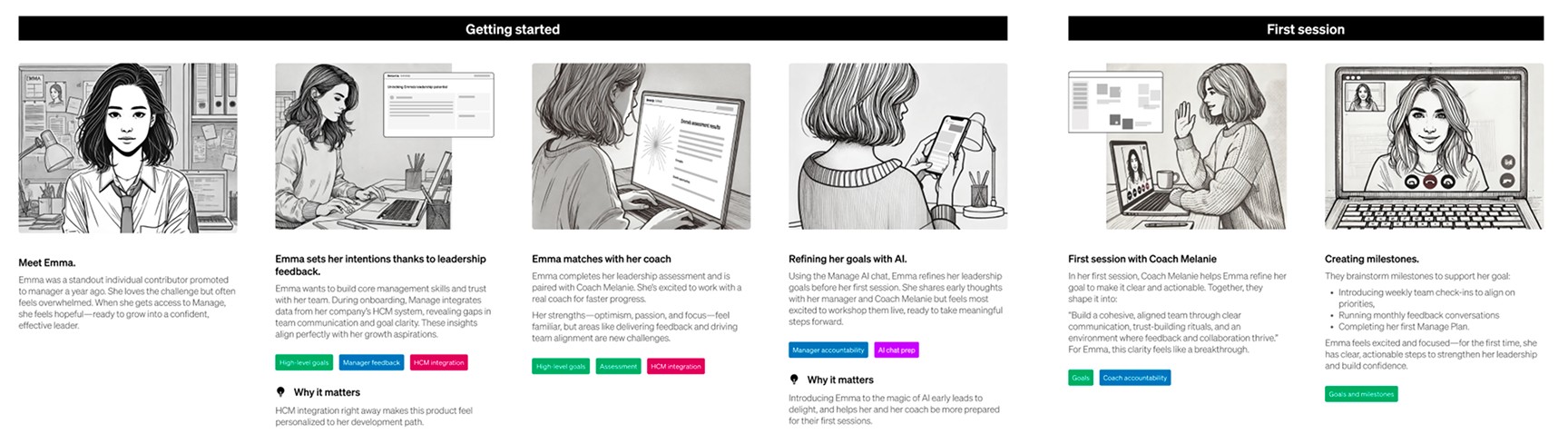
To help the team design beyond a single plan experience, I synthesized the research into manager personas and longitudinal journey storyboards.
Rather than focusing on one development plan, these artifacts illustrated how leadership growth unfolds across months and years.
At this stage, I experimented with generative AI to craft these storyboards, following our core personas as they engaged with BetterUp.
This helped the team shift perspective from isolated learning plans to ongoing leadership development, creating alignment across Product, Growth, and Behavioral Science around a long-term engagement strategy.
Experiments Supporting the Progress Vision
With the long-term opportunity defined, we launched targeted experiments to test how progress could be surfaced in Manage. Each explored a different signal of growth while informing a broader progress system.
1
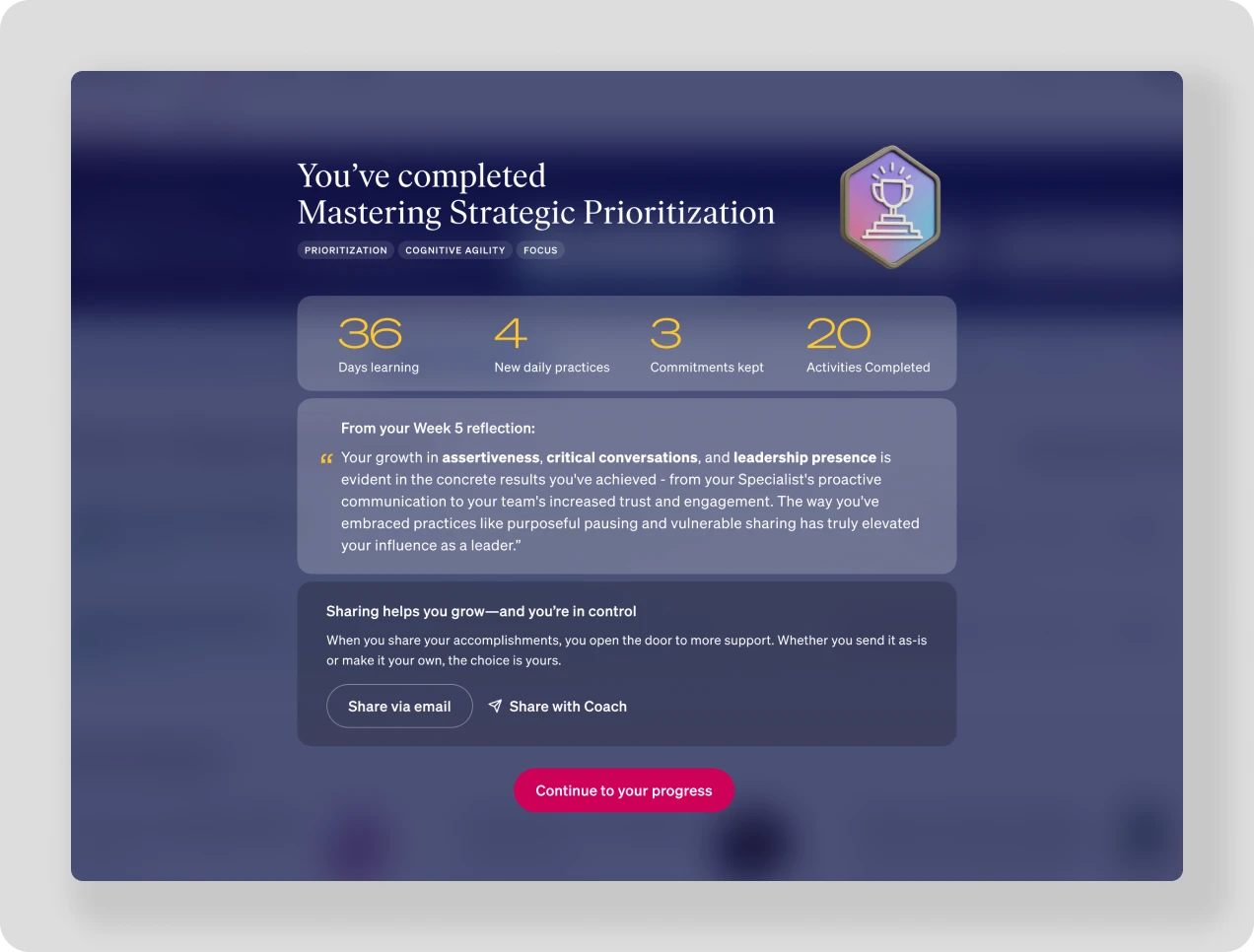
Personalized Progress Signals
Experiment
We introduced personalized progress cues that surfaced early signs of development within a plan, testing whether visible momentum would encourage continued engagement.
Why it matters
Highlighting progress earlier helped managers recognize that development was already underway.
2
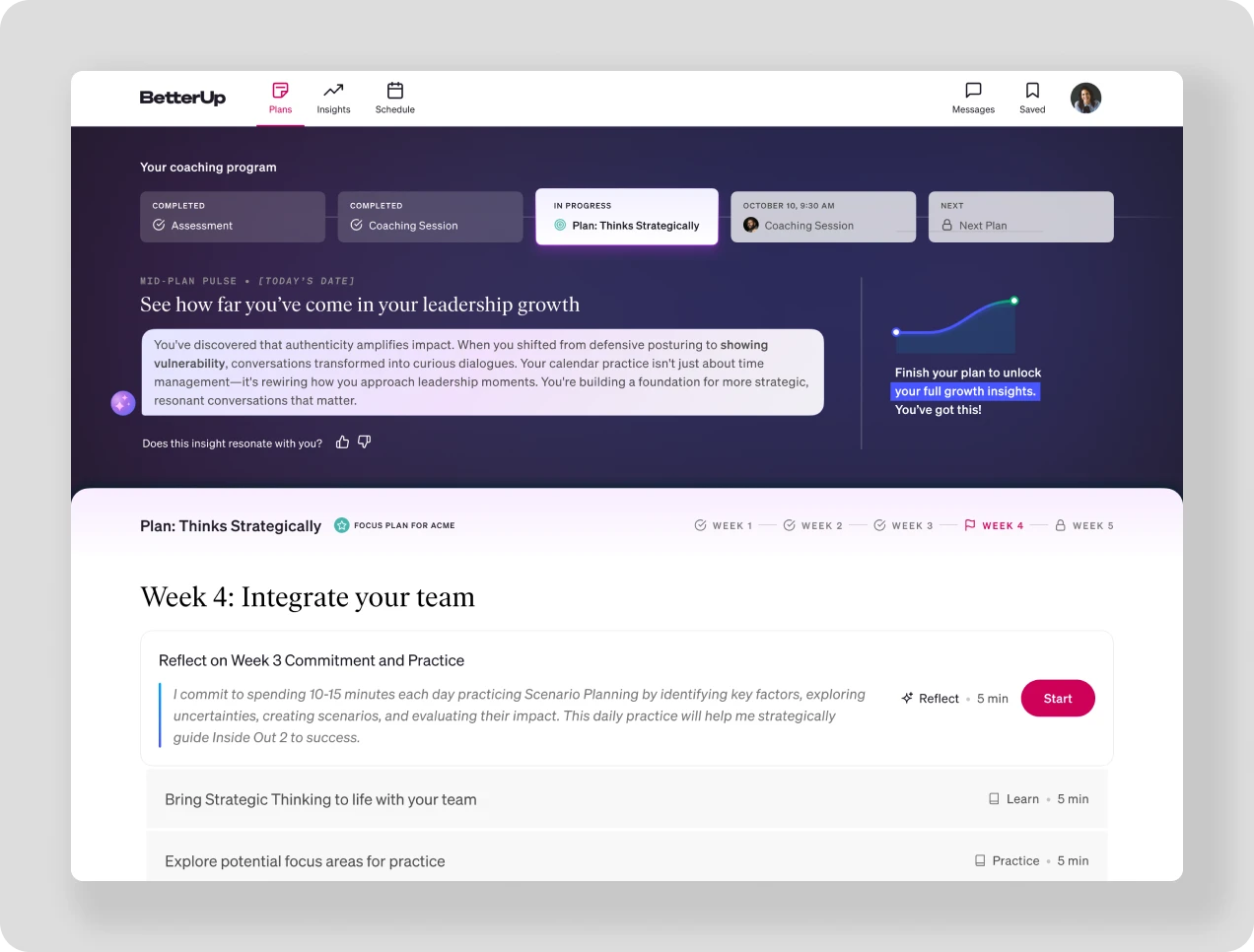
Milestone celebrations
Experiment
We introduced milestone celebrations tied to plan completion, testing whether recognizing key moments of progress would encourage managers to continue their development.
Why it matters
Acknowledging milestones helped make leadership growth feel tangible and reinforced that progress was building over time.
✨ AI also played a role here: I created custom GPTs modeled on personas to run rapid feedback loops and pressure-test concepts and prototypes before launch.
Reflection & Impact
This project reinforced how difficult leadership growth is to measure in traditional product experiences. Development happens gradually, which makes signals of progress essential for sustaining motivation.
Working through this problem also shaped how I approach ambiguous product spaces. Rather than jumping directly to features, I focus first on understanding how users perceive progress and value.
When products make growth visible, they help people recognize momentum—and that momentum is often what keeps them coming back.